







The way to measure, monitor, and manage consumption goes through a major transformation. Traditional meters are being replaced by connected technologies that provide accurate, automated and actionable data. Smart metering systems use digital meters, communication networks, software platforms, and data analytics, which creates a more effective approach to utility management.
From electricity distribution and industrial facilities to water supply networks and residential buildings, smart metering solutions are helping organisations to improve their billing accuracy, detect abnormal consumption, reduce operational costs, and make better resource management decisions. Based on this transformation are smart meter systems and advanced communication technologies, which help move from periodic meter reading towards continuous, data-driven management.
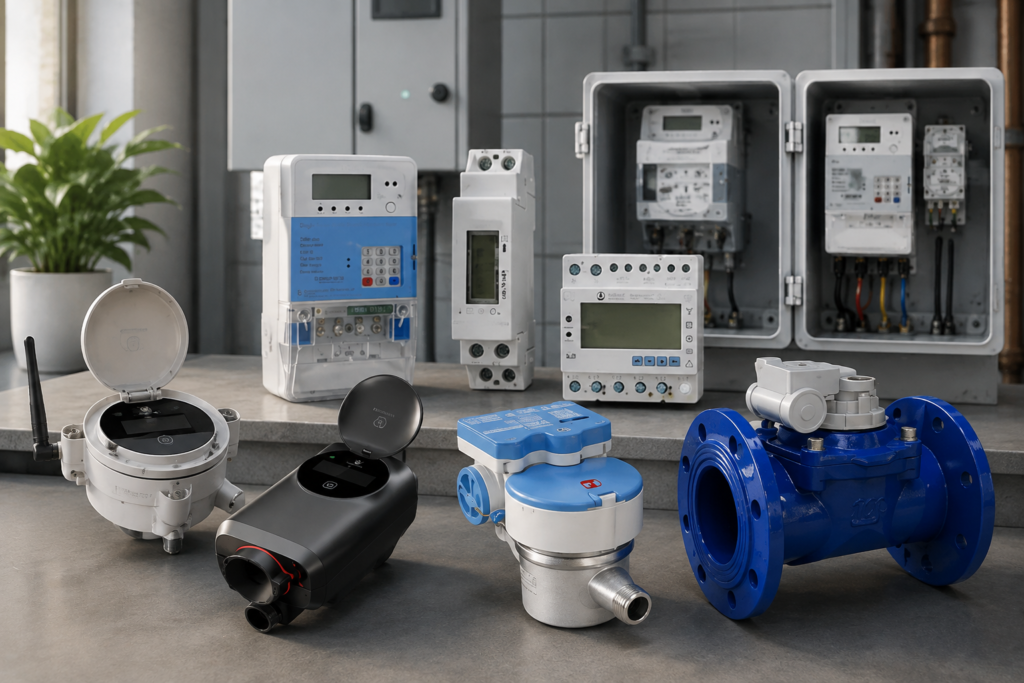
What Are Smart Metering Systems?
Smart metering systems are integrated through digital measurement and communication solutions which are designed to automatically collect consumption and transmit it to the central management platform. Unlike traditional meters, which generally require manual readings, smart meters will record use at defined intervals and communicate data remotely.
The complete system typically includes the meter, communication network, head-end systems, meter data management systems, and interfaces with billing, customer-services, and utility-management platforms. Advanced metering infrastructure has extended these capabilities through two-way communication between meters and utility operators.
It makes metering more than a billing function. It will become a digital information layer for monitoring demand, identifying abnormal patterns, supporting operations decisions, and improving customer engagement.
What Are Smart Metering Systems?
Standard smart metering systems use four major layers. These are:
- Smart meter: The meter measures electricity, water, gas, and other utility parameters and stores relevant readings and event information.
- Communication network: Meter data is transferred through technologies like RF, cellular communications, power-line communication or other suitable connectivity options.
- Head-end and data management: The head-end systems receive meter information, whereas the meter data management system processes, validates, stores, and organises large volumes of data.
- Applications and analytics: Processed information will support billing, demand forecasting, outage management, consumption analysis, customer portals and other operational applications.
It is the interconnected structure that allows utilities to transform raw meter readings into useful operational intelligence.
Smart Energy Metering for Modern Electricity Networks
Smart energy metering is mainly important as electricity networks become more decentralised and dynamic. Smart electricity meters will provide detailed consumption data and, depending on the deployment, support functions like remote monitoring, time-of-use billing, outage information, tamper detection, and remote service management.
The data will improve load forecasting and demand management. For customers, more detailed consumption information will make it easier to understand when and how electricity is being used.
Smart metering will also support wider grid modernisation initiatives. With suitable infrastructure, meter data will contribute to demand-response programmes, distribution of energy integration, and more efficient distribution network management.
The Growing Role of Smart Water Metering
Water management presents a different but equally important chance. Smart water metering enables commercial facilities, residential communities, and industrial sites to collect more frequent information about water usage.
Modern smart water meters will help to identify unusual flow patterns, which will indicate leakage, excessive consumption, or other problems. Instead of depending exclusively on periodic readings, operations will use consumption data to investigate potential issues much more easily.
For commercial and industrial facilities, detailed consumption information will support water-efficiency programmes and will help identify the areas where operational changes will reduce unnecessary use.
What Is Advanced Metering Infrastructure?
Advanced metering infrastructure is much bigger than a smart meter. Advanced metering infrastructure is the system that links meters, communication tools, data platforms and utility apps together.
Most AMI systems use two-way communication. This means utility companies can do more than just collect data. If the system allows it, utility companies can also send commands or settings back to the devices in the field. This is what makes AMI different from ways of reading meters automatically.
Setting up an AMI means you have to think about more than just picking a meter. You must think about how reliable the communication’s how well different parts work together. You also need to focus on cybersecurity, how the data is organised, how the system grows and how the AMI fits into the tools the utility company already uses.
The Main Benefits of Digital Metering Systems
Digital metering systems offer a lot of advantages in energy and water applications:
- Automatic data collection: Decreased reliance on meter reading field work and manual data capture.
- Greater billing accuracy: More frequent and finer interval readings are less prone to estimation or reading errors.
- Remote metering: Utilities do not have to make regular visits to a customer’s site to obtain an accurate read.
- Detection of leaks and abnormal use: Consumption data trends can be an indication of leaks, tampering, or excessive usage requirements.
- Operational efficiencies: Field service interventions are decreased with the capability to perform diagnostic actions remotely.
- Demand management: Consumption data will be increasingly granular for load forecasting and load management initiatives.
- Customer engagement: Increased data clarity on a customer’s usage will empower them to manage usage.
- Data-driven decision making: Analysis of historical and interval data can inform resource management decisions and planning initiatives.
The value of these benefits depends on the system design, communication performance, data quality, cybersecurity, and effective integration with utility operations.
Selecting the Right Smart Metering Solutions
There are several technical and operational considerations which an organisation must assess when exploring a smart metering solution. The fundamental ones are metering accuracy and regulatory compliance; however, there is more than this.
Compatibility in terms of communication is essential as it ensures that a smart meter can successfully communicate with a given network and back office system, and where multi manufacturer smart meters may need to be used in the rollout, interoperability must also be a key feature to consider (an example being that interoperability and data integration were a core aspect to consider in AMI architecture according to the Department of Science & Technology, India). Also assess the ability for a chosen technology and application to be scaled-something that may work well for a smaller business premise might need large modification when being applied across several thousand or millions of meters. It will also need to cover: cybersecurity, firmware management, data privacy, battery life for appropriate devices, durability, and after-sales technical support.
Why select Shenzhen Xingyuan Intelligent Meter Co., Ltd.?
Shenzhen Xingyuan Intelligent Meter Co., Ltd always focuses on intelligent metering technology, which is designed for modern utility management requirements. The combination of digital measurements with communication and data-management capabilities enables intelligent meter manufacturers to help to use and create scalable solutions for electricity and water monitoring.
For businesses who are evaluating smart metering solutions, selecting the experienced technology partner is important for achieving reliable measurement, communications compatibility, system integration and long-term operational performance. The properly designed deployment will transform metering from a basic billing function into an important component of modern energy and water management.
Conclusion
The transition from traditional meters to smart metering systems represents a fundamental change in how energy and water are measured and managed. Smart electricity meters, smart water meters, smart energy metering, and smart water metering provide increasingly detailed information, whereas AMI systems connect to field devices with communication and data-management infrastructure.
As utilities and organisations pursue greater effectiveness, sustainability, transparency and operational control, digital metering systems will continue to play an increasingly data management, and intelligent analytics will create a foundation for smarter, more responsive utility networks.
FAQs
1. What are smart metering systems?
These systems use connected and networked digital devices that collect utility consumption readings in an automated way and forward them to a central facility. Such devices help in automated invoicing, remote consumption monitoring and operation as well as in developing analyses of consumption data and operating the utility.
2. What is the difference between AMR and AMI?
AMR (Automatic Meter Reading) is concerned only with automatic acquisition of meters, while, in general, advanced metering systems include communication in both directions and the acquisition systems with measurement instruments, communication networks and the system for management of meters.
3. How do smart water meters help in detecting leaks?
Smart water meters can generate high-frequency water consumption or flow measurements at the consumer premises; hence, abnormal usage, continuous or intermittent, could suggest or prompt further investigation by the utility or by the consumers.