









Water is one of our most precious resources, and in the present day, using it wisely matters for everyone from homes to businesses, factories and even whole cities. The old water meters do the basic job. They track what you use, but that’s all about it. Some usually need to be checked by hand. It means if there is a weird spike in the use or a leak you cannot see, you might not be able to catch it; still, the problem gets bigger. Modern smart water metering offers a more effective approach through the combination of digital measurement, wireless communication, data analytics, and automated alerts.
A smart water meter will provide frequent consumption data, which helps users and water managers understand where, when and how water is used. This understanding will support better resource planning, accurate billing, conservation, and faster identification of potential leaks. Research on advanced metering infrastructure has also found that consumption data and leak alerts can help to reduce water wastage and encourage faster leak repairs.
Some manufacturers like Shenzhen Xingyuan Intelligent Meter Co., Ltd., offer smart metering solutions, which represent a vital part of the transition towards more connected and data-driven water infrastructure.
What Is a Smart Water Meter?
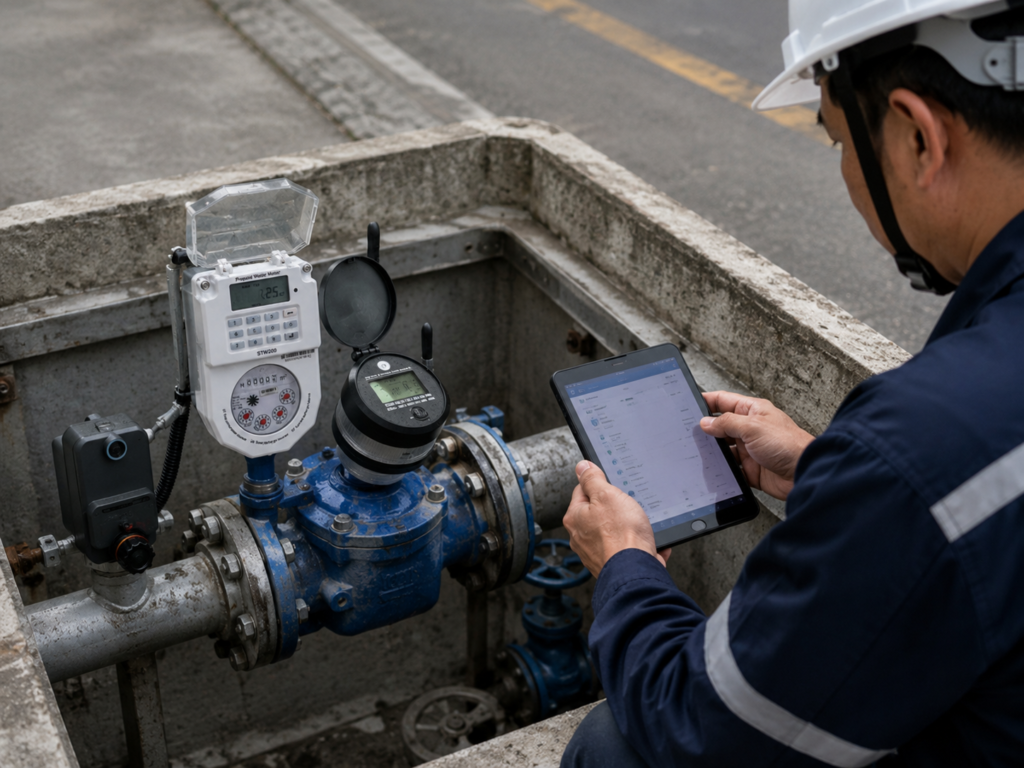
A smart water meter is a digital device which is designed for measuring water use and communicating meter data automatically. Unlike traditional mechanical meters, which are generally read manually or at relatively long intervals, connected meters will provide more frequent information about water usage.
Modern smart water meter technology will incorporate digital sensors, wireless communication, remote reading capabilities, data platforms, and alert systems. Depending on the application, communication will use technologies like cellular networks, NB-IoT, LoRaWAN, RF communication, or other IoT connectivity options.
The result is greater visibility into water use. Instead of discovering an unusual water bill at the end of the billing period, users will potentially identify abnormal use much more easily.
How Smart Water Meter Technology Works
The basic operation of smart water meter technology involves four important stages: measurement, communication, analysis, and action.
First, the meter measures water flows and records usage. The device collects data at regular intervals, creating a detailed use profile.
Secondly, the meter transmits the information through the appropriate communication network to the central platform, dashboard, or software systems.
Thirdly, the collected data will be analysed to identify consumption trends, unusual flow patterns, excessive use, or continuous water flow.
Finally, the system will generate alerts or reports that allow property managers, utilities, businesses, or users to take action.
It is a continuous flow of information transformation of the water meter from a simple measuring device into an important component of the wider digital water-management system. Smart systems will provide near-real-time information which supports better operational decisions.
Water Management with Smart Meters
Water management with smart meters provides organisations with better control over water use and distribution. The detailed use of the information will help managers understand demand patterns and identify areas where water is being wasted.
For example, a commercial building will notice that water usage remains remarkably high during periods when the building is largely unoccupied. The information will trigger an investigation into the toilets, pipelines, storage systems, irrigation devices, or other possible sources of unnecessary intakes.
Smart meters will also help to create consumption benchmarks. By comparing the present use with historical data, managers will identify significant variations and investigate them before they become expensive problems.
For water usage, smart metering will improve monitoring of distribution networks, provide more accurate customer readings, and better identification of water losses. Smart water management research highlights the role of connected meters for improving consumption monitoring and loss management.
Smart Water Meter Leak Detection
One of the most important applications is smart water meter leak detection. The hidden leak will continue for hours, days, or even weeks before someone notices visible water damage. Traditional meters will show increased use, but the problem will only become apparent when the next bill arrives.
Smart meters will monitor consumption patterns more frequently. Continuous or unusual water flow will indicate a possible leak. For example, if water continues flowing constantly during a time when a property normally has little or no consumption, the system will flag the activity for investigation.
Some smart metering platforms will send an automated notification when abnormal use is detected. This allows property owners, facility managers, or utility teams to investigate potential leaks sooner.
However, smart meter alerts will generally be treated as indicators rather than absolute proof of the leak. There is a continuous flow that may sometimes result from valid activities like irrigation, tank filling, industrial procedures, or other planned water usage. Suitable limits and analytics will therefore help to reduce false alarms.
Reduction of Water Waste and Operating Costs
Early leak identification will prevent significant water loss. It will also reduce the risk of secondary damage caused by undetected leakage, notably in buildings, industrial facilities, and commercial properties.
Smart metering will reduce the need for manual meter readings and support remote monitoring. It will improve operational efficiency when there is a large number of meters distributed across different locations.
The large-scale study involved more than 85,000 residential customers and found that resource allocation which reduces unnecessary site visits improves maintenance planning and more informed decision-making.
For us, for facility operations, all of the benefits will contribute to better resource allocation that reduces unwanted site visits, improved maintenance planning and more informed decision-making.
Why Select Reliable Smart Metering Solutions?
Profitable smart water management depends on more than installing a digital meter. Accuracy, durability, communication reliability, data security, software integration, and long-term technical support are all important considerations.
A reliable manufacturer will understand the requirements of residential, commercial, industrial and utility applications. Shenzhen Xingyuan Intelligent Meter Co., Ltd. will play the essential role in providing intelligent metering solutions designed to meet modern water-monitoring requirements.
While there is a selection of smart meters, buyers will consider measurement accuracy, communication, battery life, data-management capabilities, leak-alert functions, installation requirements, and agreement with the existing infrastructure.
Final Thoughts
The future of water management is moving to connection-based infrastructure where meters, sensors, communication networks, cloud platforms, and analytics work together.
AI and advanced data analytics will improve the ability to identify abnormal consumption patterns and give priority to potential leaks. Research is already exploring AI-supporting approaches for near-real-time leak detection and management. As smart cities and digital infrastructure will continue to develop, smart water metering will become increasingly valuable for the conservation of water and improved operational effectiveness, and makes water systems more responsive. Finally, the biggest advantage of the smart water meter is visibility. By turning water consumption into actionable data, organisations will move from reactive management towards proactive monitoring, faster leak detection, and more sustainable water use.
FAQs
1. What’s a smart water meter?
It’s a digital device that keeps track of how much water you use and sends that info wirelessly for things like remote monitoring, analysis, billing, and even finding leaks.
2. How does leak detection work with smart water meters?
They monitor your water usage and detect any abnormality or irregularity in water usage that needs further attention. In case there is something unusual going on, like water running when it is not supposed to run, they will raise an alarm indicating a probable water leak.
3. What are the advantages of using smart meters for water management?
Smart meters allow you to know your water consumption, detect water leakage, reduce wastage of water, and make water meter readings effortless. Moreover, smart meters ensure accuracy in water billing and help organisations make effective decisions.
4. Why is smart water meter technology important for the future?
Honestly, in a world where connectivity and big data will become commonplace, smart water meters will help us better track our water usage. Using analytics and the Internet of Things, resource management will become efficient and sustainable in the future.