











Accurate water measurement is important for residential buildings, commercial facilities, industrial operations, and municipal water management. Traditionally, mechanical water meters have been mainly used for measuring water consumption. However, advances in metering technology have introduced more effective and intelligent alternatives; these include ultrasonic water meters.
Even though both technologies measure water flow, they operate differently and offer distinct advantages. Understanding the differences between ultrasonic and mechanical meters will help businesses, utilities and property owners select the right solutions for their specific requirements.
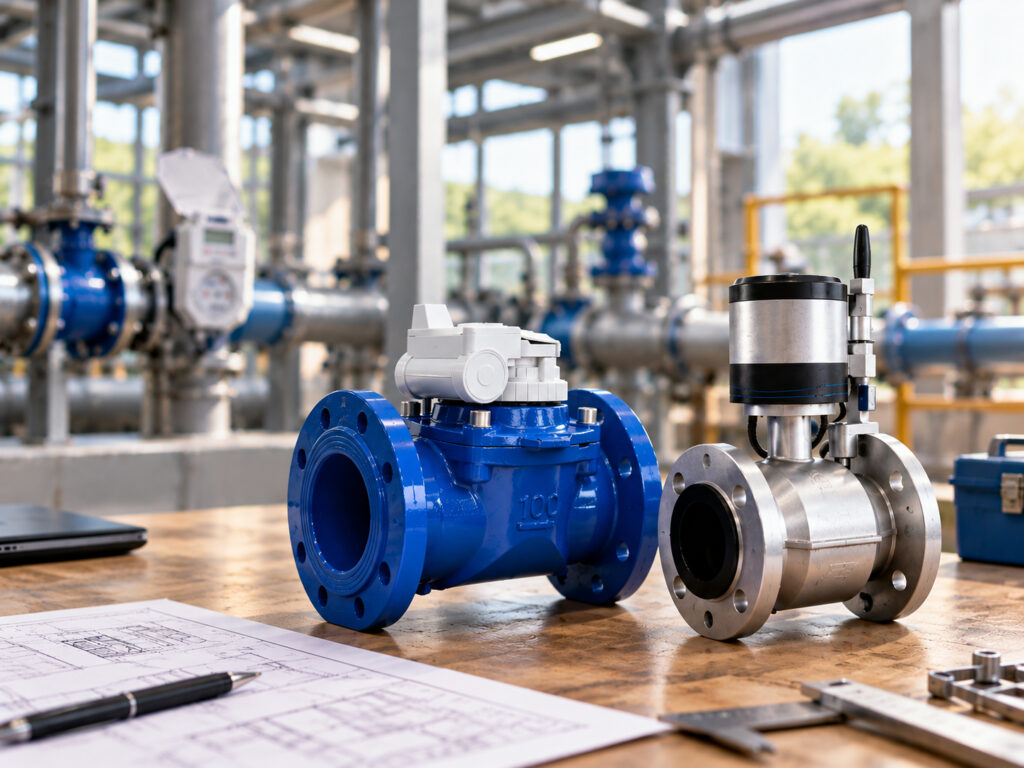
What Is a Mechanical Water Meter?
A mechanical water meter measures water consumption and uses physical moving components. As water passes through the meter, it moves an internal mechanism like an impeller or turbine. The movement is then converted into measurements of the volume of water flowing through the system.
Mechanical meters have been popular since they are relatively simple, familiar, and cost-effective. They will provide reliable performance in many traditional water measurement applications.
However, mechanical components will have a tendency to wear over time. Dirt, sediment, corrosion, and other particles in the water will affect moving parts, potentially reducing measurement accuracy. Regular maintenance will therefore be required. These are mainly challenging to operating environments.
What Is an Ultrasonic Water Meter?
The ultrasonic water meter uses sound waves for measuring water flow rather than depending on moving mechanical components. The meter sends ultrasonic signals through the water and analyses the difference in signal travel time, which determines the velocity of the water.
These approaches are part of modern ultrasonic water technology, which has enabled highly accurate measurements and has reduced dependence on components which will physically wear out.
Since there are no traditional moving parts in the measurement mechanism, ultrasonic meters will offer long-term stability and lower maintenance requirements. They will also provide advanced data capabilities, which will make them suitable for modern water management systems.
Main Differences Between Ultrasonic and Mechanical Water Meters
1. Measurement Technology: The biggest difference is how the two meters measure the water. Mechanical meters do depend on the moving components, whereas the ultrasonic water meter uses the ultrasonic signals to calculate flow. This is the difference which will make ultrasonic technology mainly useful for applications where long-term measurement stability and advanced monitoring are important.
2. Accuracy and Reliability: Mechanical meters will provide dependable readings, but their accuracy will be affected by wear, sediment, and changes in mechanical components over time.
Ultrasonic meters generally avoid these issues since they do not require the impeller or turbine to measure flow. This will help maintain consistent measurement performance over the extended operating time.
3. Maintenance Requirements: Mechanical meters will contain moving parts that will mainly require servicing or replacement. Water quality will also influence the condition of the internal components over time.
Modern ultrasonic meters typically require less mechanical maintenance since the measurement system has no traditional moving mechanism. This makes them an attractive option for utilities and facilities that are looking to reduce maintenance costs.
4. Smart Data and Connectivity: One of the of the main advantages of the modern ultrasonic meters is their ability to integrate with the digital monitoring systems. A smart water meter will collect and communicate consumption information which helps the users to monitor water use more efficiently.
A digital water meter will also support remote data collection, consumption analysis, leak detection, and automated billing when integrated with the suitable communication systems.
Choosing the Right Water Meter
The decision between ultrasonic and mechanical meters depends on many factors: the needs of the site, the specifics of installation and use, costs, water properties, maintenance requirements, and the need for measurement data.
A mechanical meter can be sufficient for some simple tasks. But for more demanding applications, businesses and utilities can turn to ultrasonic meters to get more automation, data, and reliability.
Shenzhen Xingyuan Intelligent Meter Co., Ltd. develops smart water meters that are designed to address the rising needs of the modern water utility market.
Conclusion
The comparison of water meters of ultrasonic and mechanical types shows the tendency of water metering technology to innovate. Mechanical meters are suitable for many applications, but their use may be limited by some specific conditions related to the presence of moving parts.
An alternative to conventional mechanical meters can be meters using piezoelectric sensors and special mathematical algorithms, such as a new generation of ultrasonic water meters. Thanks to technologies such as built-in communication devices, smart water meters, also called digital water meters, enable easy reading of measurements, ensuring awareness of the amount of water consumed and contributing to its conservation. Therefore, for municipal utilities, industries, and private landowners, associations focused on sustainability, accuracy, conservation, remote readout, and efficiency, ultrasonic water meters are a promising area of development.
FAQs
1. What is the main difference between ultrasonic and mechanical water meters?
Mechanical meters typically use moving parts like an impeller or turbine to measure the water flow, and an Ultrasonic Water Meter uses ultrasonic waves to determine the flow rate without using any mechanical measuring elements.
2. Are ultrasonic water meters more accurate than mechanical meters?
An ultrasonic water meter can provide more accurate and consistent measurements over time because it does not have mechanical parts that can degrade with age. Accuracy depends on the meter itself, its environment and installation.
3. Can an ultrasonic water meter be used as a smart water meter?
Many ultrasonic water meters can also be used as smart water meters because the meters can have additional communications and data-logging equipment installed, allowing the meter to participate in a utility’s smart water network.
4. Why are digital water meters becoming more popular?
A digital water meter can often do more than simply measure the amount of water that has passed through it. Some can be used to create a leak detection and usage monitoring system that can reduce costs by detecting and stopping leaks in real time or automatically generating invoices for the water the customer has used.